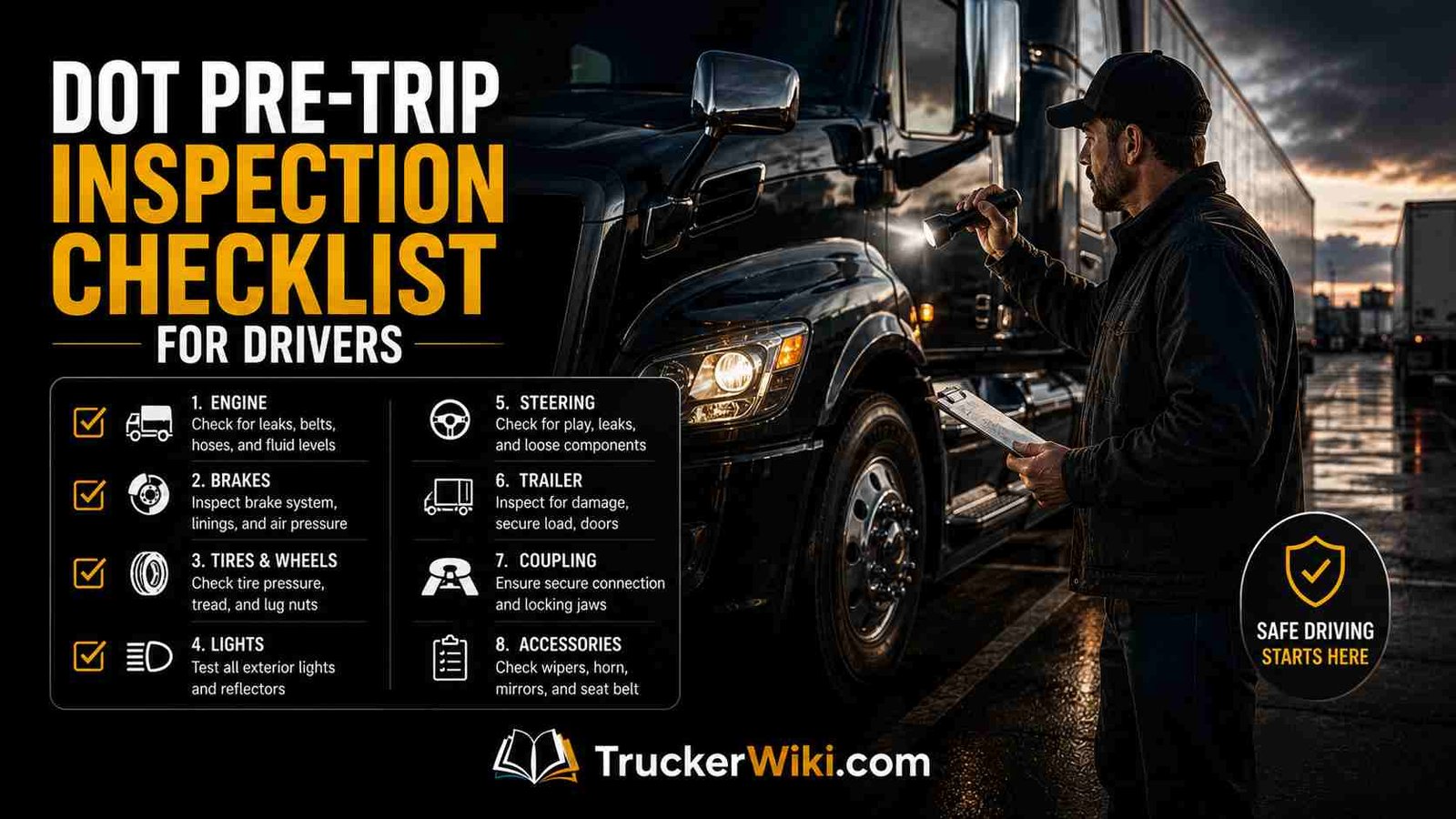
DOT Pre-Trip Inspection Checklist for Drivers
The pre-trip inspection requirement under 49 CFR 392.7 states that a driver may not operate a commercial motor vehicle unless the driver is satisfied that the vehicle’s parts and accessories are in good working order. The regulation specifies a minimum list of components that must be checked before departure: service brakes (including trailer brake connections and parking brakes), steering mechanism, lights and reflectors, tires, horn, windshield wipers, rear-vision mirrors, coupling devices, wheels and rims, and emergency equipment.
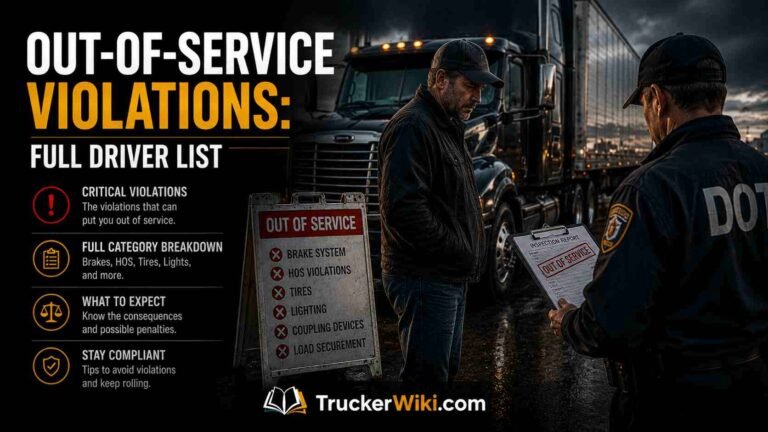
FMCSA estimates that thorough pre-trip inspections prevent approximately 14,000 accidents annually. Yet brake, tire, and lighting violations remain the leading causes of vehicle out-of-service orders at every annual Roadcheck event. During the 2025 International Roadcheck, 22.6 percent of vehicles inspected were placed out of service, primarily for defects that a proper pre-trip inspection would have caught before the truck left the yard. A 15-to-30-minute investment before departure is the most effective single action a driver can take to prevent a roadside OOS order and protect their CSA profile.
The Legal Requirement and What It Actually Says

Two separate federal regulations govern inspection documentation for CDL drivers before and after a trip. Understanding the distinction matters for both compliance and liability.
49 CFR 392.7 (pre-trip inspection): The driver must be “satisfied” that the vehicle’s required parts and accessories are in good working order before driving. The regulation does not require the driver to complete a written checklist or sign any documentation as a condition of the pre-trip inspection itself.
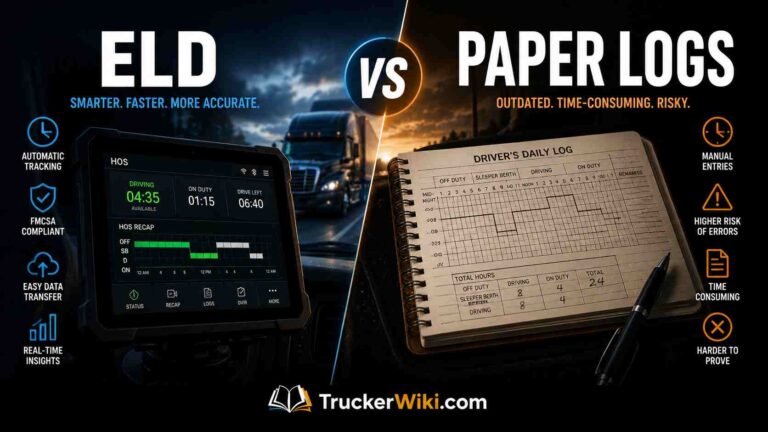
The legal standard is driver satisfaction based on a physical inspection, not a form. However, the absence of a written record means the driver cannot prove the inspection was conducted if a defect is later alleged to have been present before departure. Most carriers require written or digital pre-trip documentation as company policy for this reason, even though federal law does not mandate it.
49 CFR 396.13 (DVIR review before driving): Before driving, a driver must review the last Driver Vehicle Inspection Report (DVIR) for the vehicle. If the DVIR shows any defect that was reported, the driver must sign the certification that the defect was repaired or that repair was not necessary before driving. This is a separate obligation from the pre-trip inspection itself. A driver who conducts a thorough pre-trip but does not review and sign the prior DVIR is in violation of 396.13 regardless of the pre-trip result.
49 CFR 396.11 (DVIR, end of day): At the completion of each day’s work, a driver must prepare a written report identifying the vehicle, any defects or deficiencies that would affect safe operation or cause the vehicle to fail a DOT inspection, and any defects reported to the motor carrier. If no defects are found, the driver must certify that the vehicle is in satisfactory condition. The DVIR is the end-of-trip document; the pre-trip inspection is the beginning-of-trip physical check. Both are required, and both have their own documentation rules.
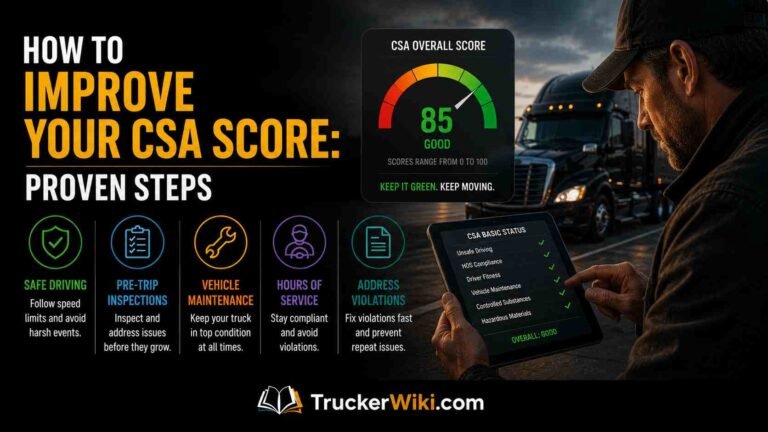
The 2026 CSA SMS methodology introduced a specific enforcement implication for pre-trip inspection quality: defects discovered at a roadside inspection that a driver should have identified during a standard pre-trip walk-around are now categorized as “Driver Observed” violations within the Vehicle Maintenance BASIC.
This creates a direct link between a driver’s daily pre-trip rigor and the carrier’s Vehicle Maintenance BASIC percentile. A brake defect that a trained driver would observe during a standard walk-around, discovered instead by an enforcement officer at a weigh station, now carries explicit driver-accountability weight in the CSA scoring system.
The 7-Point Walkaround Method
The 7-point walkaround method is the industry-standard sequence for conducting a systematic pre-trip inspection. CDL skills tests use this sequence, CVSA inspection training references it, and FMCSA’s guidance materials recommend it. The seven positions cover every required inspection area without requiring a driver to retrace their steps.
Position 1: Engine Compartment (Under Hood)
Open the hood and inspect from the engine side before the engine is started:
- Engine oil level: check dipstick; confirm level is within operating range
- Coolant level: check reservoir and overflow; confirm no visible leaks or contamination
- Power steering fluid: check reservoir level
- Washer fluid: confirm adequate level
- Battery: terminals secure, no corrosion buildup
- Belts: check for cracks, fraying, glazing, or looseness
- Hoses: check for cracks, soft spots, or swelling
- Air compressor: check mounting, drive belt, and air lines if accessible
- Wiring: no exposed or frayed wiring near hot surfaces
Position 2: Front of Vehicle
Move to the front of the truck:
- Headlights: both high and low beams functional; proper aim
- Front turn signals: both sides functional
- Clearance and marker lights: all lit
- Front bumper: secure, no damage that could snag or injure
- Windshield: no cracks in the wiper sweep area; mirrors clean
- Tires (front/steer axle): tread depth at least 4/32 inch, no sidewall damage or exposed cords, lug nuts all present and tight; stems capped
- Steering: inspect pitman arm, drag link, steering gear box for secure mounting and no visible damage
Position 3: Driver Side
Walk down the driver’s side of the truck:
- Fuel tank and cap: cap secure, no leaks
- Steps and handholds: secure, no broken welds
- Rear tandem tires: tread depth at least 2/32 inch on drive axles, dual tires not touching (no space-saver tire mounted improperly), valve stems accessible
- Rear axle: no signs of oil leaks from differential; lug nuts present and tight
- Suspension: leaf springs intact, no broken or shifted leaves; spring hangers and U-bolts tight; air suspension bags not collapsed
- Frame and cross members: no cracks, breaks, or welds showing stress fractures
- Exhaust system: no leaks; routing clear of wiring and fuel lines; clamps secure
Position 4: Rear of Vehicle (Power Unit or Trailer)
Inspect the rear of the power unit and the front of the trailer if combination:
- Taillights, brake lights, and turn signals: all operational
- Reflectors: present and intact
- Splash guards: secure
- Trailer coupling (if applicable): beginning check of coupling area from rear view before Position 7 for full coupling inspection
- Glad hands: seals intact; connections secure
Position 5: Passenger Side
Mirror image of Position 3:
- Same suspension, tire, axle, frame, and fuel system checks on the passenger side
- Air bag and suspension hangers specific to this side
- Any difference between driver and passenger side conditions is a flag
Position 6: Cab Interior
Enter the cab and check:
- Seatbelt: buckle functions; webbing not frayed or cut
- Steering wheel: check for excessive play (typically no more than 10 degrees on a 20-inch wheel for power steering)
- Horn: both electric and air horns functional
- Windshield wipers: both blades intact; washer fluid sprays correctly
- Heater and defroster: functional
- Emergency equipment: fire extinguisher (charged, accessible), triangles or flares (3 required), spare fuses (if applicable)
- Air pressure gauges: build to at least 90-100 PSI before testing brakes; check for low-pressure warning indicator function
- Air brake test: apply and release service brake; check for pressure drop; test spring brake pop-out (approximately 20-45 PSI); check air lines for leaks by listening with engine off after pressure is built
- Parking brake: confirm parking brake holds when applied
- Mirrors: adjusted for full rear visibility; no cracks
Position 7: Coupling and Cargo (Combination Vehicles)
For tractor-trailer combinations, the coupling system requires its own inspection sequence:
- Fifth wheel: properly mounted, jaws locked around kingpin, no visible gap between upper and lower fifth wheel; locking mechanism fully engaged; safety latch in place
- Kingpin: not bent or damaged
- Glad hands and electrical connection: air lines properly seated in glad hands; electrical cord connected and secured
- Trailer landing gear: fully raised; crank handle in place and secure
- Cargo securement: load is properly distributed, tie-downs meet minimum count and condition requirements for load type, no chains or straps frayed or missing hooks
The Components That Produce the Most OOS Orders

Not all inspection items carry equal enforcement consequence. Data from the 2025 CVSA International Roadcheck confirms the same vehicle OOS categories that dominate inspection findings year after year. A pre-trip inspection that focuses its attention on these areas first is the highest-leverage use of the available inspection time.
Brakes: The leading vehicle OOS category every year. CVSA OOS criteria for brakes include: brake adjustment out of specification (the most common brake violation), brake lining with less than the required thickness, brake drums with heat cracks, brake hoses that are chafed, crimped, or leaking, and ABS indicator lights that fail to extinguish after startup.
Under the North American Standard OOS Criteria, a vehicle with 20 percent or more of its brakes defective is placed OOS. For a standard 5-axle combination (10 braking surfaces), 2 brakes out of adjustment places the vehicle OOS. The pre-trip brake check should physically verify slack adjuster positions, listen for air leaks with the engine off, and confirm the low-pressure warning activates at the correct threshold.
Tires: 21.4 percent of vehicle OOS violations in 2025. OOS criteria: steer axle tires with less than 4/32-inch tread depth; drive and trailer axle tires with less than 2/32-inch tread depth; tires with exposed cord or fabric; dual tires that are touching; and tires with sidewall bulges or fabric separation. The 4/32-inch threshold for steer axles is stricter than the 2/32-inch threshold for all other positions. A driver who is running on marginal steer tires needs to identify the issue before departure, not at a weigh station 200 miles from the terminal.
Lighting: Any headlights, taillights, or brake lights that are non-functional can produce OOS citations. The minimum lamp requirement under 49 CFR 393.9 prohibits operating a vehicle with required lamps that are inoperative. A burned-out marker light found at inspection produces a non-OOS citation. A non-functional brake light found at inspection can produce an OOS order.
Coupling devices: Improperly locked fifth wheel, missing safety latch, damaged kingpin or jaw, and disconnected or leaking glad hands are all citations. Fifth wheel defects can result in trailer separation on the road and are treated as high-severity vehicle violations.
Pre-Trip Documentation: Why You Should Write It Down
Federal law does not require a written pre-trip inspection form. The standard under 49 CFR 392.7 is driver satisfaction based on a physical inspection, not a signed document. But three practical reasons make written pre-trip documentation a sound professional habit.
First, litigation defense. In crash litigation involving a commercial vehicle, plaintiff attorneys routinely allege that the vehicle had a pre-existing defect that the driver failed to identify. A driver with a dated, time-stamped pre-trip record showing the vehicle condition before departure is in a much stronger position than a driver who claims a verbal inspection was conducted but has no documentation. A carrier with a six-month archive of pre-trip records can demonstrate a consistent inspection culture. A carrier with no pre-trip records cannot.
Second, the 2026 CSA methodology. The “Driver Observed” violation category means that defects an enforcement officer finds at a roadside inspection that a driver should have caught on pre-trip now carry explicit driver-accountability scoring weight. A carrier whose drivers conduct documented pre-trips that identify and remove defective vehicles from service before they reach the road builds a demonstrable defense against these findings.
Third, carrier policy compliance. Most carriers require written pre-trip documentation as company policy even when federal law does not mandate it. A driver who skips the written portion of the pre-trip is in violation of company policy, which can affect discipline, insurance coverage, and employment status independent of any regulatory consequence.
For a full breakdown of how Vehicle Maintenance BASIC violations from pre-trip failures connect to CSA score consequences, see the How to Improve Your CSA Score article. For the full framework of roadside inspection levels and what enforcement officers check, see the DOT Roadside Inspections: All 6 Levels Explained article.
The Post-Trip DVIR and How It Connects to the Next Driver’s Pre-Trip
The pre-trip inspection and the post-trip DVIR are two ends of the same compliance loop. The pre-trip confirms the vehicle is safe to depart. The DVIR documents the vehicle’s condition on return, specifically any defects that developed or were discovered during the trip. The next driver to operate that vehicle is required by 49 CFR 396.13 to review the DVIR from the previous operation before driving and to sign certification that any reported defects were repaired or that repair was determined unnecessary.
This creates a direct dependency: a driver who completes a thorough post-trip DVIR and correctly documents a defect is protecting the next driver by ensuring that the defect either gets repaired or is explicitly acknowledged before the vehicle moves again. A driver who fails to document a defect on the DVIR, or who leaves the defect section blank to avoid triggering a maintenance hold, is passing an undocumented problem to the next shift and removing the legal record that would have shown the defect was known.
Civil penalties for DVIR failures are separate from pre-trip penalties. Under 49 CFR 396.11, failing to complete a required DVIR carries a maximum penalty of $1,270 per day. Falsifying a DVIR, such as certifying no defects when the driver knew defects existed, carries a maximum of $12,700 per entry. Failing to repair a defect that was documented on a DVIR and then operating the vehicle with that unrepaired defect carries a maximum of $15,420. These penalties apply independently of any underlying vehicle condition violation. A driver who finds a brake defect, accurately reports it on the DVIR, and then drives the vehicle the next day without a repair certification is in violation of both 396.11 and 392.7.
Carriers whose maintenance programs include a closed-loop DVIR system, where drivers submit reports digitally, maintenance staff is automatically notified of defects, repairs are documented in the system, and the certification is attached to the vehicle record before the next dispatch, have a documented compliance chain that protects against both regulatory enforcement and third-party litigation. Carriers that use paper DVIR forms that get stacked on a counter and reviewed intermittently have the same compliance obligation but a much weaker documentation defense.
The daily discipline of completing a thorough post-trip DVIR, beyond its regulatory requirement, is the mechanism that prevents pre-trip failures from accumulating. A defect that is documented at the end of the day and repaired overnight is not a defect the morning driver finds at their pre-trip. A defect that goes undocumented is the defect that a roadside inspector finds three days later after the same truck has made six more trips. The DVIR is where the CSA score protection begins, not at the roadside inspection.
By TruckerWiki Editorial Team | Regulatory sources: 49 CFR 392.7 via eCFR, 49 CFR 396.11 and 396.13 via eCFR, 49 CFR 393 Parts and Accessories via eCFR, CVSA North American Standard OOS Criteria, CVSA 2025 International Roadcheck Results. Pre-trip inspection requirements are enforced at the state level; requirements may vary for intrastate operations.